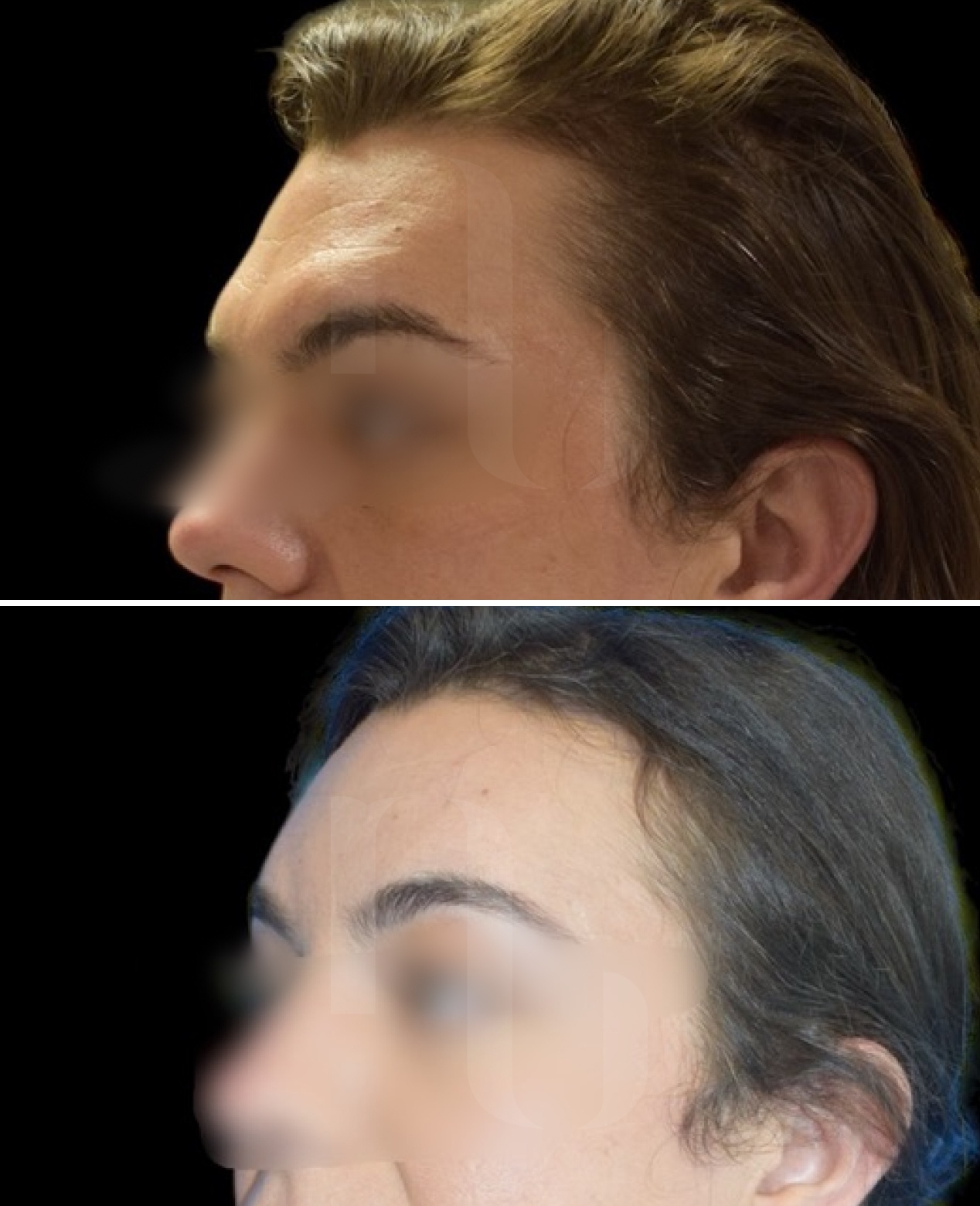
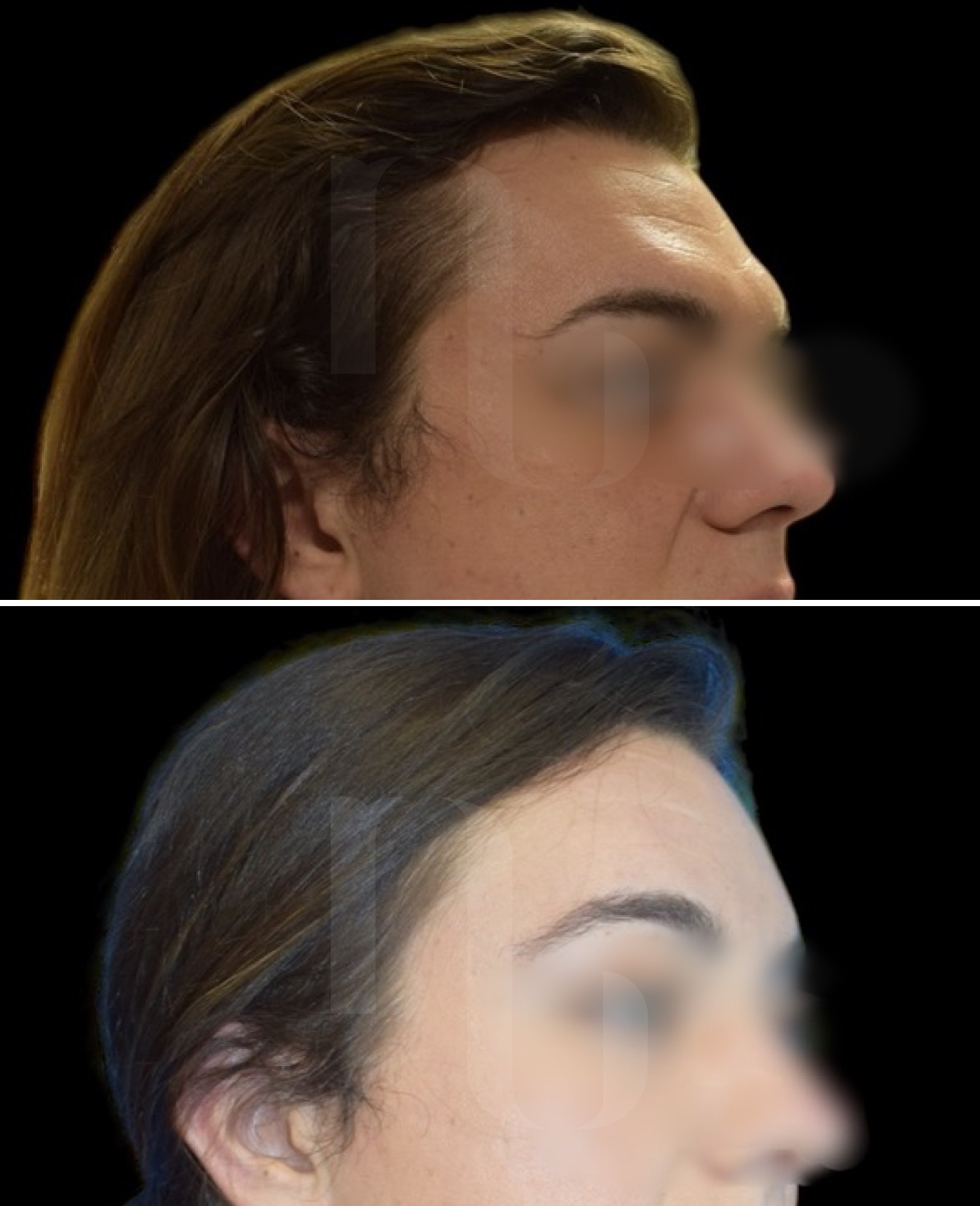
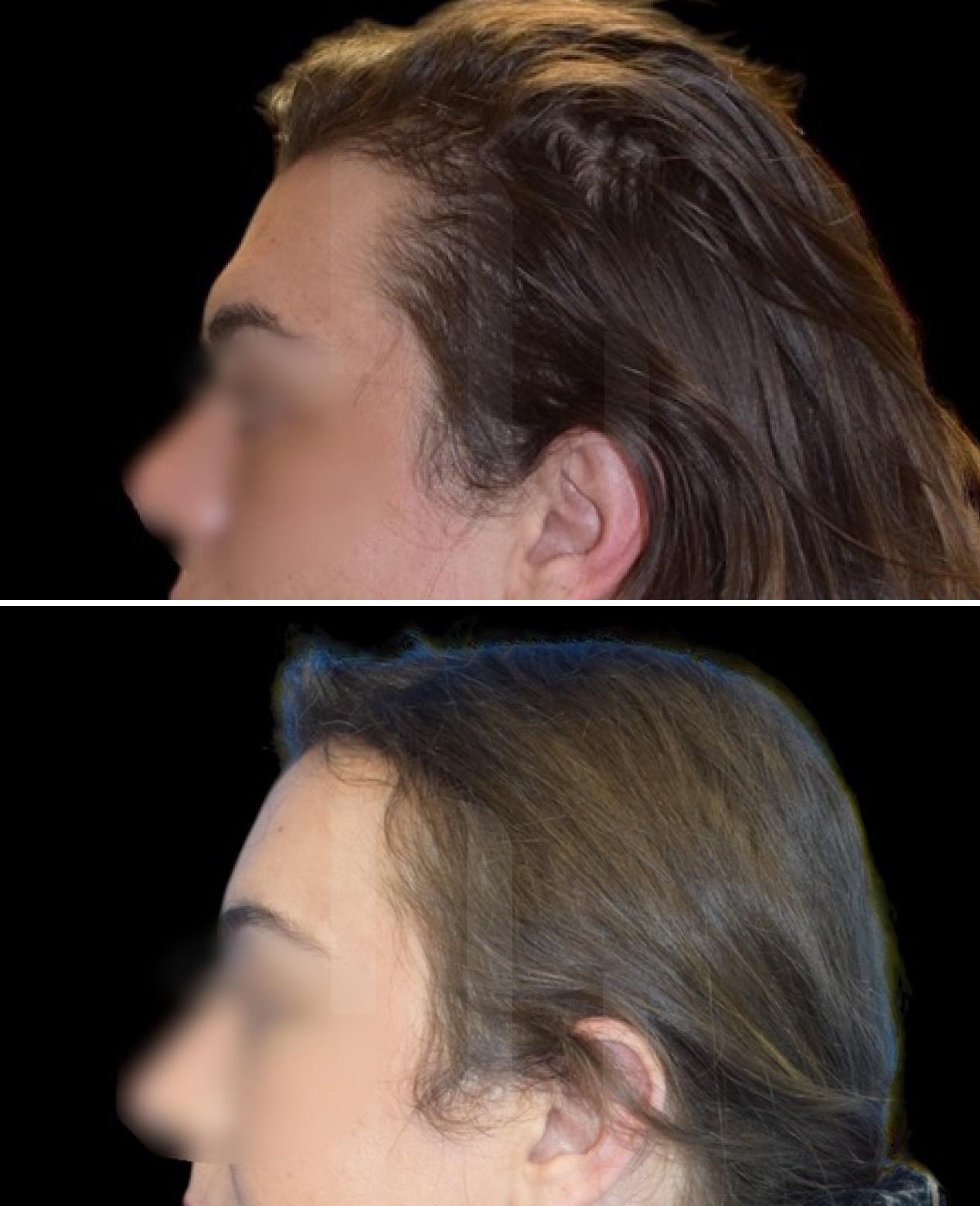
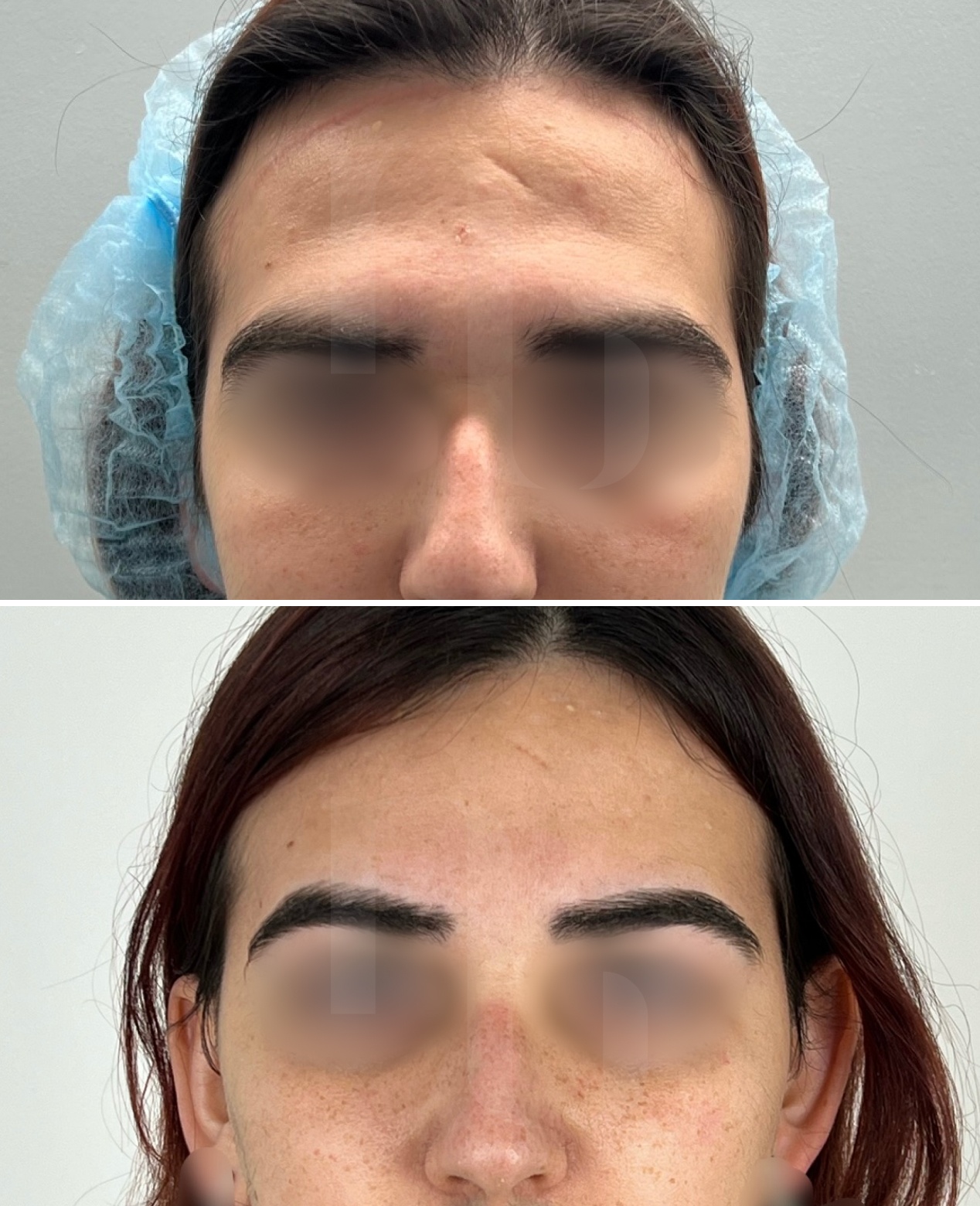
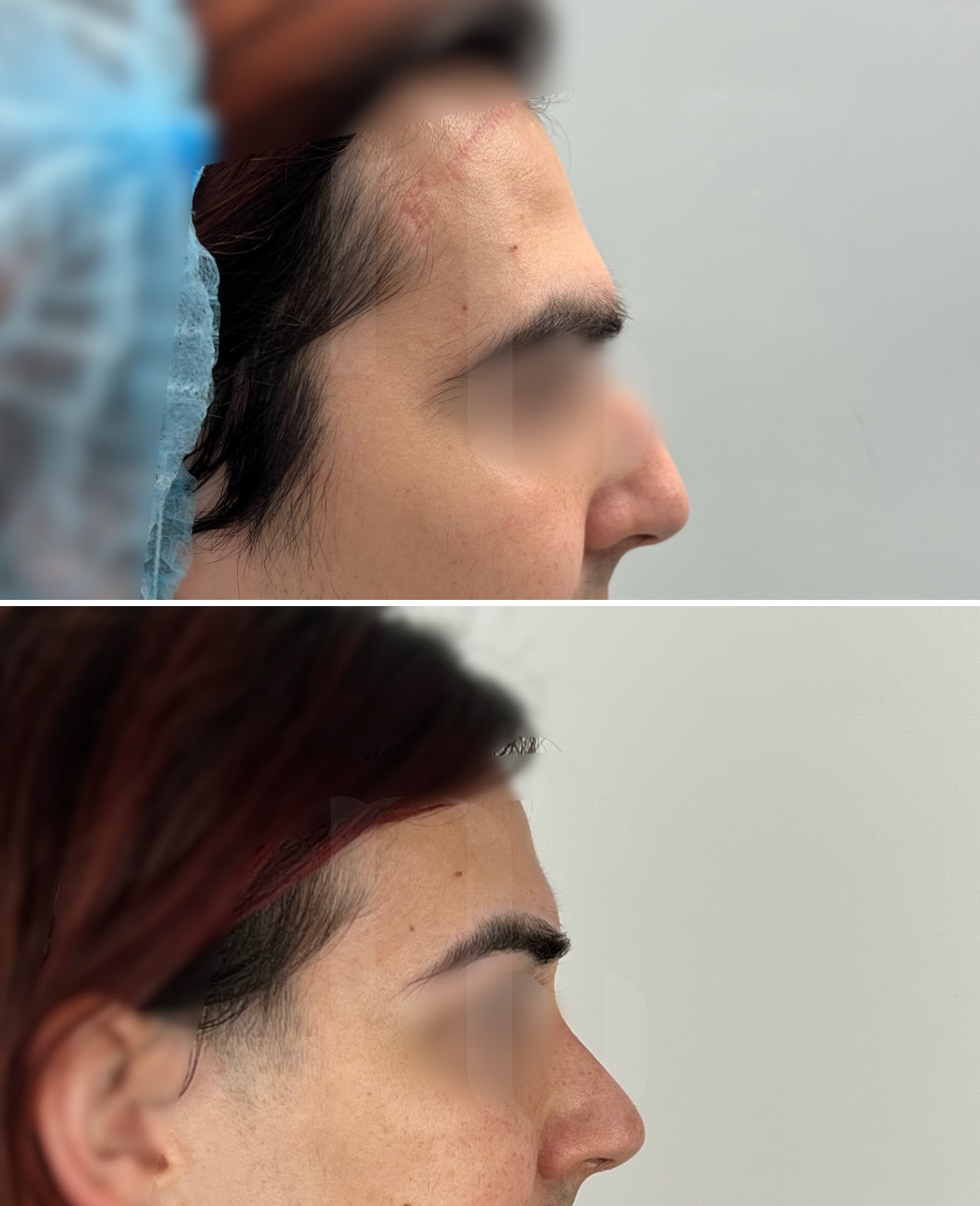
Before any surgery, two consultations with Dr. Brault are required. The first is to understand your request, perform a clinical examination focused on the face, and prescribe imaging.
A CT scan of the face is essential before this surgery, as it helps assess the thickness of the frontal bone and the presence or absence of frontal sinuses. If the bone is thick and the sinuses are absent, bone shaving is sufficient to soften the forehead. In most cases, however, the frontal sinus is pneumatised (present), and its anterior wall is thin. Shaving isn’t possible; instead, an osteotomy (bone cut) of the anterior wall is required. The bone is then set back to reduce the forehead’s projection safely. The repositioned bone fragment is fixed in place with screws and two small plates.
The height of the forehead and scalp laxity are assessed if a hairline advancement is planned. Eyebrow position, shape, and symmetry are also evaluated.
The procedure is performed under general anaesthesia, and a pre-op consultation with an anaesthetist is required. Depending on the extent of the modifications, surgery lasts between 2 and 3 hours. If no hairline lowering is performed, the incision is made within the hair and is invisible. If the forehead is lowered, the scar is in front of the hairline and may be slightly more visible. In such cases, a hair transplant may be recommended a few months later to camouflage the scar.
The hair is never shaved for this procedure. The incision is made between or in front of the hair. No staples are used ; sutures dissolve naturally a few weeks after surgery.
Two drains (Redons) are placed at the end of the procedure and removed the following day. An overnight stay at the clinic is recommended after this type of surgery.